
This post was written by a guest contributor.
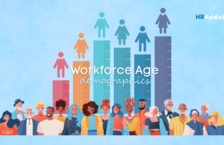
The age of a workforce can reveal more than just birthdays. In the bigger picture, it influences healthcare spending, benefits, and staffing. For HR professionals building and planning for a resilient workforce, paying attention to these trends isn’t just about understanding who’s working today. It’s about preparing for what the workforce may look like tomorrow.
TABLE OF CONTENTS
Why workforce age demographics matter
Over the past several decades, America’s workforce demographics have shifted considerably. According to recent data from MyPerfectResume’s Oldest Occupations Report, workers in the U.S. aged 55 and older increased by 17.3% between 2014 and 2025, which reflects a 5.6 million growth.
For HR professionals, these changes are more than just a trend. They influence everyday decisions. How a workforce is distributed by age can affect hiring strategies, promotions, benefits, and workplace culture. A business with a staff that consists primarily of early-career professionals (25–34 years old) will most likely have different priorities than one that consists of more senior talent (55+ years old). Understanding this will not only make employees feel supported but also provide valuable context for future planning.
How age impacts benefit costs
As workforce demographics shift, so do the costs of employee benefits. Healthcare utilization generally increases as employees age. Why? Older adults typically require more medical services than their younger counterparts. Data from the Peterson-KFF Health System Tracker supports this. Adults aged 34 and younger are responsible for 23% of healthcare spending, while employees between 35 and 54 years old represent 25%. Those aged 55 and older, however, account for 54% of total healthcare spending.
Healthcare utilization is only part of the story. Employer-sponsored insurance (ESI) spending has also climbed in recent years. According to KFF’s 2025 Employer Benefits Survey, single coverage premiums increased by 5% from 2024 to 2025, while family coverage had a 6% increase. It’s another trend HR professionals can’t ignore. While an aging workforce isn’t the sole contributor to these rising costs, it can amplify the financial pressures organizations face.

Using demographic data to plan ahead
Understanding the makeup of a workforce becomes more purposeful when companies use the information for future planning. Looking ahead is key. Instead of relying on assumptions, HR and benefits professionals can use data to better predict potential obstacles before they become a reality.
One way to achieve this is through scenario planning. By modeling different workforce age mixes, businesses can estimate how hiring, retirements, and employee turnover can affect the workplace. That often begins with a few key questions:
- What happens if these employees retire within the next year? Five years?
- Are there enough qualified employees for leadership roles?
- How will healthcare costs change if the average workforce age increases? Decreases?
Organizations can then evaluate these hypothetical situations and decide what is best for their business. The goal is to stay ahead of change. For instance, if projections show many employees nearing retirement in the next year, HR teams can begin planning for recruitment. Likewise, by estimating how healthcare utilization will change as the workforce ages, benefits managers can adjust their budget in anticipation of the increase that comes with it.
Forecasting costs by age group offers another more in-depth layer of insight into the workplace. Tracking benefit utilization across different age groups can help identify spending patterns. Combined with historical data, this information can be vital. Companies can create budgets that are more accurate and sustainable, avoiding any unexpected increases in benefit costs.
Looking beyond premiums
As the workforce ages, don’t assume higher benefit costs are caused solely by premium increases. While an employee’s age can influence how they utilize their healthcare, it’s only one factor in overall costs. To better understand what’s driving these costs, HR and benefits professionals should separate premium increases from claims utilization.
Premiums reflect the amount an organization pays for health coverage. They can increase for a variety of reasons. For instance, medical inflation, insurer pricing, or changes in the healthcare market can influence these costs.
Claims utilization, on the other hand, measures how employees are using their benefits. Companies should evaluate high-cost claimants independently. A small number of complex medical claims could skew company data, misrepresenting the healthcare needs of the workplace.
Looking at these data points together allows HR leaders to make smarter choices. On the other hand, basing a choice on broad assumptions can backfire, resulting in costly mistakes. Taking a more data-driven approach instead protects not only the company, but its employees.
Adapting benefits to a changing workforce
No two workplaces have the same needs. Instead of relying on a one-size-fits-all approach, organizations should evaluate whether their benefit offerings truly reflect the demographics of their employees. Reviewing deductible structures, health savings accounts (HSAs), flexible spending accounts (FSAs), and other cost-sharing options can help balance affordability with comprehensive coverage. Organizations should also evaluate extra offerings such as vision coverage, group insurance, telehealth services, and condition management programs to determine if they’re still providing value to employees.
A stable workplace can be just as valuable as a strong benefits package. Organizations that invest in experienced employees are better positioned for future changes. Planning ahead makes a difference, especially since retaining senior talent keeps valuable knowledge within the business instead of seeing them walk out the door. Additionally, it gives organizations time to prepare for potential retirements, develop future leaders through cross-training and mentorships, and keep critical operations moving. These efforts strengthen both workforce resilience and business continuity.
Final thoughts
Workforce age demographics influence much more than hiring and retirement trends. They shape healthcare spending, budgeting, and future planning. Ignoring these trends can make long-term strategy more difficult. Organizations that regularly analyze these data points can better prepare themselves for the ever-changing American workforce.